Rent an Office, Own the Savings: Open Access Solar for Tenants Who Hate Surprise Bills

For many office tenants, unpredictable electricity bills can feel like a monthly gamble. One month the cost is manageable, the next it spikes without warning—eating into profits, disrupting financial planning, and creating unnecessary stress for business owners. But what if you could rent an office space and still enjoy the kind of long-term savings typically reserved for property owners? That’s exactly where Open Access Solar steps in as a game-changer.

Open Access Solar allows businesses—whether they own the property or rent it—to access solar energy directly from large off-site solar farms. You don’t need a rooftop, you don’t need to invest in infrastructure, and you don’t need to convince your landlord to install panels. You simply subscribe to renewable power at a cost significantly lower than the traditional grid.

And for tenants who hate surprise bills, this is the smartest energy move you can make.

Why Tenants Need Open Access Solar

In today’s competitive business world, cost optimization is everything. While energy-efficient appliances, lights, and AC upgrades help, they don’t tackle the real burden—rising electricity tariffs.

With Open Access Solar:

  • You buy power directly from a solar project at a pre-decided tariff, usually 20–40% cheaper.

  • You receive predictable monthly bills.

  • You reduce dependency on expensive grid electricity.

  • You operate more sustainably and create a greener brand identity.

It’s the perfect model for tenants who want savings without owning the building.

The Big Win: No Installation Needed

One major hurdle for tenants is convincing landlords to permit rooftop panel installations. Most avoid it due to maintenance responsibilities or structural concerns.

Open Access Solar eliminates this barrier completely.
You don’t need:

  • Roof rights

  • Capital investment

  • Maintenance staff

  • Upfront costs

  • Approvals from building owners

You simply sign a power purchase agreement (PPA) with the solar provider and start receiving clean energy.

This flexibility makes Open Access the top choice for:

  • IT companies

  • Manufacturing units

  • Startups

  • Warehouses

  • Co-working spaces

And any business that wants predictable electricity bills without infrastructure complications.

Savings That Make a Real Difference

Traditional power bills fluctuate based on:

  • Grid tariff hikes

  • Seasonal consumption changes

  • Fixed and variable charges

  • Fuel cost adjustments

But Open Access Solar provides far more stability. The tariff usually remains locked for years, shielding tenants from unexpected increases.

Most businesses save anywhere between ₹15 lakhs to ₹50 lakhs annually, depending on their energy consumption.

Even small offices with moderate usage see a 25–30% monthly saving, making it one of the fastest ways to reduce operational expenses.

Green Energy = Better Brand Value

Today’s customers expect brands to be environmentally conscious. Even investors prefer sustainable operations.

Switching to Open Access Solar gives you:

  • A strong corporate sustainability identity

  • Green certifications

  • ESG compliance advantages

  • Reduced carbon footprint

For tenants trying to stand out in competitive markets, this green positioning can be a huge advantage.

But What About Solar for Homes?

While tenants benefit from Open Access Solar, homeowners often explore Solar System Installation For House setups. Rooftop solar for homes is a one-time investment that delivers decades of savings through net metering.

Homeowners enjoy:

  • Lower electricity bills

  • Energy independence

  • Minimal maintenance

  • Increased property value

If you own a home or plan to install rooftop solar for a residential property, this option is ideal. But for tenants, Open Access remains the simpler and more cost-efficient choice.

Understanding Commercial Solar Installation Cost

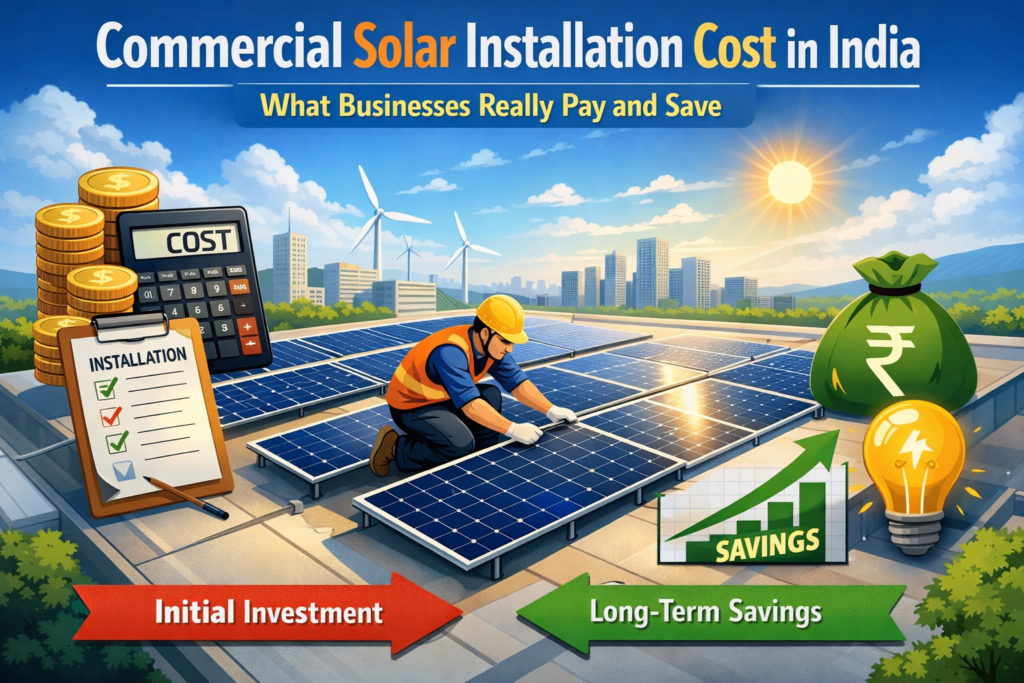
Businesses that own their building may sometimes compare Open Access Solar with installing their own rooftop systems. In such cases, it’s important to know the average Commercial Solar Installation Cost.

In India:

  • A typical commercial solar system costs ₹40–₹50 per watt.

  • A 100 kW system may cost between ₹40–₹50 lakhs.

  • Payback period is usually 3–4 years with strong long-term ROI.

While rooftop solar gives excellent savings, it requires:

  • Large upfront capital

  • Annual cleaning and maintenance

  • Structural approvals

  • Available rooftop area

This is why Open Access Solar becomes a smart alternative for tenants—zero installation, zero investment, zero hassle.

Final Thoughts

Renting an office shouldn’t mean accepting high or unpredictable electricity bills. With Open Access Solar, tenants finally have the power to control their energy costs without owning the property.

You get:

✔ Predictable bills
✔ Long-term savings
✔ No installation headaches
✔ Clean, renewable power
✔ Better brand value

So if you’re a tenant tired of surprise bills, it’s time to switch to a smarter, greener, and more affordable energy model.

The Landlord’s Cheat Code: Solar Installations That Attract Tenants and Repel High Bills

installation

In today’s competitive rental market, landlords are constantly looking for ways to increase property value and attract quality tenants—without dramatically increasing maintenance costs. One of the smartest and most future-ready solutions is solar installation. Solar power doesn’t just cut electricity bills; it transforms your property into an energy-efficient, desirable, and sustainable living space that tenants love.

Let’s explore why solar installations are becoming the ultimate “cheat code” for landlords.

 1. Solar Power Increases Rental Appeal

Tenants today, especially millennials and working professionals, prefer eco-friendly homes that reduce their monthly expenses. A property equipped with solar power instantly stands out. Features such as Residential Solar Panels give tenants the confidence that they’ll enjoy lower electricity bills and a greener lifestyle.

Solar-powered homes also perform better on rental listing platforms due to high demand for sustainable living spaces.

 2. Lower Electricity Bills = Happier Tenants (and Higher Retention)

High electricity bills often frustrate tenants and can affect their decision to continue renting. With solar energy, monthly power costs drop significantly.

If your property runs on solar, tenants enjoy predictable, lower bills—making them more likely to stay long-term.

Plus, landlords offering solar-powered homes can charge slightly higher rent because the tenant still saves in total cost of living. This win–win situation is a major reason solar homes are quickly gaining popularity.

 3. A Smart Long-Term Investment for Landlords

Solar is more than just an attractive feature—it’s a financial asset.

  • It increases property value

  • Protects you from rising electricity tariffs

  • Decreases dependency on grid power

  • Offers tax benefits and government subsidies (in many Indian states)

While Commercial Solar Installation Cost varies depending on system size and location, it usually pays for itself within 3–5 years. After that, the majority of energy your property uses becomes almost free.

For landlords who own multi-unit buildings, solar can drastically reduce common-area electricity expenses such as lighting, lifts, parking spaces, and water pumps.

 4. Solar-Powered Amenities Attract Premium Tenants

Modern renters evaluate properties based on amenities. Solar installations allow you to add attractive features like:

  • Backup power for common areas

  • Solar water heating systems

  • EV charging points

  • Well-lit outdoor and parking areas

  • Solar-powered security systems

These features not only improve living standards but also position your property as “smart” and future-ready.

 5. Sustainability Matters More Than Ever

Environmental awareness is growing rapidly. Tenants prefer living in eco-conscious spaces that reduce carbon footprint. Choosing solar energy helps landlords contribute to cleaner communities without compromising profit.

By installing Residential Solar Panels or commercial rooftop systems, you demonstrate responsible ownership—something tenants and investors value highly.

 6. Reducing Operational Costs for Landlords

Landlords of commercial complexes, PGs, or multi-family units can benefit immensely from solar. Running common areas often leads to heavy electricity expenses. Solar reduces this burden and offers predictable energy costs for decades.

With stable and reduced monthly costs, landlords experience better overall ROI from their properties.

 Final Thoughts: Solar Is the Landlord’s Ultimate Cheat Code

Lower bills, higher tenant satisfaction, increased rental demand, and long-term financial gains—solar installations offer landlords multiple advantages. Whether you’re considering Residential Solar Panels for a single property or evaluating the Commercial Solar Installation Cost for a larger building, making the switch to solar is one of the smartest decisions you can make.

Green ROI Revolution: Turn Empty Rooftops into Revenue with ZeroCarbon Commercial Solar

Commercial Solar Installation Cost

n today’s energy-conscious world, businesses are under growing pressure to operate sustainably while managing rising electricity costs. Power bills continue to climb, grid interruptions are common, and reliance on traditional energy sources leaves companies vulnerable to unpredictable financial swings. But what if the unused space above your head could transform from dead real estate into a profit-generating asset?

Welcome to the Green ROI Revolution—a future where empty rooftops become mini power plants through ZeroCarbon Commercial Solar solutions, turning sunshine into savings and energy independence into reality.

The Untapped Financial Power of Rooftops

Across industrial sheds, commercial complexes, hospitals, schools, retail shops, and corporate offices, one valuable resource remains overlooked: the rooftop. Instead of letting it sit idle, businesses can install a Solar Power System For Business and generate clean electricity at a fraction of their current utility rates.

A well-designed commercial solar installation can:

  • Reduce electricity bills by 40% to 80%

  • Protect businesses against tariff hikes for 25+ years

  • Deliver ROI within 3–4 years, depending on subsidies and policies

  • Increase company valuation and ESG score

  • Create an additional revenue stream through net metering & open-access energy trading

This transformation is exactly what ZeroCarbon specializes in—building high-efficiency solar systems that turn wasted space into profitable infrastructure.

 Why Go Solar for Commercial Use?

Switching to solar is more than a sustainability decision—it’s a strategic financial move. With the right Solar Power System For Business, organizations can lock in low-cost energy for the long term.

Key Benefits for Businesses:

Benefit Details
Massive cost savings Reduced reliance on grid power and diesel generators
Income from surplus energy Sell unused energy back to the grid
Tax advantages Accelerated depreciation & green energy incentives
Improved brand image Demonstrates corporate responsibility and innovation
Low maintenance & long life 25–30 year lifespan with minimal upkeep

As industries expand and power needs grow, companies that shift early enjoy lifetime advantages.

Not Just Solar: Hybrid Renewable Solutions

While solar is the fastest-growing renewable energy source in India, wind energy is also gaining momentum—especially along coastal belts and high-wind zones. Many progressive enterprises now opt for hybrid systems, combining solar with wind to achieve round-the-clock clean power.

Through Wind Turbine Installation In India, companies can:

  • Generate power even at night or on cloudy days

  • Maximize total energy output from limited space

  • Improve grid stability and battery efficiency

  • Achieve faster payback compared to solar-only systems

ZeroCarbon offers integrated hybrid designs that merge solar panels with wind turbines for consistent and scalable energy production.

Solar Adoption Beyond Commercial: Homeowners Join the Revolution

Commercial projects lead the green transition, but residential spaces are rapidly following. Many households now install Residential Solar Panels to reduce dependency on expensive grid power and improve long-term energy security.

With increasing awareness, homeowners now treat solar installations as a smart investment rather than a luxury—giving families up to 90% savings on their electricity bills.

Whether for homes or businesses, ZeroCarbon provides advanced solar engineering, customized design, maintenance, and remote monitoring support.

Rooftop-to-Revenue Model: How ZeroCarbon Makes It Profitable

Step-by-Step ROI Transformation:

  1. Free rooftop assessment & feasibility analysis

  2. Customized engineering & optimized system design

  3. Installation with premium quality components

  4. Connection to grid & net-metering setup

  5. Start generating energy and earning from day one

  6. Real-time monitoring via mobile app

  7. Maintenance and performance guarantee

With ZeroCapital Financing and Pay-as-You-Save Power Purchase Agreements (PPA), businesses can install solar with zero upfront investment and pay only for the power they use—cheaper than the grid.

A Sustainable Shift with Real Impact

When companies transition to green power, they do more than reduce bills—they help fight climate change and create cleaner air for future generations. Saving energy means reducing carbon emissions, protecting natural resources, and building a healthier nation.

India’s renewable energy mission aims to achieve 500 GW of clean energy by 2030, and participation from industries will play a major role in achieving that target.

 Final Thought

The world is moving toward clean power faster than ever before. Those who adopt early lead the change, save more, and build stronger brand value. Your rooftop is not just a structure—it’s a hidden gold mine waiting to be activated.

From Power Cuts to Profit—Commercial Solar Done Right

In today’s energy landscape, businesses across India face rising electricity bills, unpredictable grid power, and increasing pressure to adopt sustainable solutions. Many companies are now looking for ways to gain energy independence while improving profitability—and solar power has emerged as the most powerful solution. The AskZeroCarbon Blueprint offers a strategic approach that transforms solar adoption from a confusing investment into a clear roadmap for financial growth, reliability, and sustainability.

Whether you run a manufacturing plant, commercial complex, warehouse, educational institution, or hospitality property, switching to solar can significantly reduce your dependency on grid power and diesel generators. What once seemed like a costly and complex transition is now a smart financial decision backed by cutting-edge engineering and flexible government policies. This blog explores how commercial solar systems can eliminate power cuts, generate savings, and create real profit opportunities for businesses—especially through Open Access Solar Power In India and optimized project execution.

Why Businesses Are Moving Towards Solar

Energy expenses are one of the highest operational costs for Indian businesses. Frequent outages force companies to rely on expensive diesel generators—leading to heavy expenditure and increased carbon emissions. Solar power provides a more reliable, clean, and cost-effective way to meet rising electricity needs.

Key reasons businesses are adopting solar systems:

  • Up to 60–80% savings on electricity bills depending on usage model

  • 25+ year lifespan of solar plants with minimal maintenance

  • Protection against rising commercial tariff rates

  • Improved brand reputation through sustainability initiatives

  • Faster ROI—typically 2.5 to 4 years

  • Availability of net metering and government-backed incentives

Understanding Commercial Solar Installation Cost

One of the most common questions businesses ask is about Commercial Solar Installation Cost. Pricing depends on multiple factors including system size (kW/MW needed), type of solar modules, choice of inverter, rooftop or ground-mounted infrastructure, cable quality, power backup needs, and project location.

On average:

  • Rooftop commercial solar systems cost around ₹38–55 per watt

  • Ground-mounted solar plants range between ₹32–45 per watt

  • Large MW-scale solar reduces cost significantly due to economies of scale

For example:
A 500 kW rooftop plant may cost between ₹1.9 crore–₹2.75 crore, depending on technology and structure. With savings of ₹25–32 lakh per year, payback can be achieved in under 4 years.

However, focusing only on the upfront cost is a mistake. The real value comes from:

  • Engineering & design quality

  • Long-term energy production reliability

  • Equipment efficiency

  • Warranty, service, and performance guarantees

The AskZeroCarbon Blueprint ensures every rupee spent maximizes energy output and long-term returns instead of cutting corners for short-term discounts.

Open Access Solar Power in India—The Game Changer for Large Energy Users

While rooftop solar works best for mid-sized properties, enterprises with high power requirements (1 MW and above) benefit greatly from Open Access Solar Power In India. This model allows businesses to buy power directly from large solar farms through the power grid, without needing physical installation inside their facility.

Advantages of Open Access Solar

  • Up to 40–60% cheaper electricity than traditional industrial tariffs

  • No need for large rooftop space

  • Ideal for multi-location companies

  • Energy banking and scheduling options

  • Scalable quickly depending on demand

  • Environment-friendly and ESG compliant

Many industrial hubs such as Maharashtra, Gujarat, Tamil Nadu, Karnataka, Rajasthan, and Delhi NCR already offer strong policy support for open access power.

AskZeroCarbon’s Solar Blueprint: Step-by-Step

The AskZeroCarbon approach simplifies every stage of solar project execution, ensuring transparency, precision, and profitable outcomes.

Step Blueprint Action Result
1 Detailed energy audit & feasibility Accurate sizing & ROI prediction
2 System design & engineering Maximum efficiency & safety
3 Financing & subsidy guidance Reduced investment pressure
4 Quick installation & commissioning Faster returns
5 Performance monitoring & AMC Guaranteed savings and uptime

This blueprint guarantees consistent generation and long-term system health, turning power reliability into business profitability.

From Uncertainty to Guaranteed Savings

Companies that adopt solar early gain a strong competitive advantage. With grid tariffs increasing yearly, those who delay face higher costs and possible capacity shortages.

Solar isn’t just a sustainability decision—it’s a business growth strategy:

  • More cash flow for expansion

  • Reduced operational risks

  • Added brand credibility

  • Long-term carbon reduction impact

Final Thought

The solar revolution in India is unstoppable. Whether through rooftop solar or Open Access Solar Power In India, clean energy adoption is now a proven pathway to stronger business performance. By combining thoughtful planning, reliable engineering, and guaranteed savings, the AskZeroCarbon Blueprint transforms solar power from a technical burden into a profitable asset.

If your organization is ready to move from power cuts to power profits, now is the moment to go solar—smartly and confidently.

CO2 Savings You Can Bank: Quantified Carbon Cuts from AskZeroCarbon Installations

Installations

Businesses don’t just invest in energy — they invest in measurable climate wins. AskZeroCarbon’s commercial installations convert rooftop and ground-mounted arrays into a steady stream of verified CO₂ reductions you can count, report, and (if you choose) bank toward sustainability targets. Below I break down how those carbon cuts add up, and why pairing solar with smart choices — from financing to hybrid setups — multiplies the impact.

What the numbers look like (simple, transparent assumptions)

To make savings concrete we use two common, conservative assumptions used in industry reporting:

  • Solar yield: 1 kW of installed solar generates roughly 1,200–1,600 kWh/year, depending on location and tilt.

  • Grid emission factor (India): each kWh from the grid emits roughly 0.7–0.9 kg CO₂ (range covers regional variation).

Using those ranges, 1 kW of solar reduces about 0.84–1.44 tonnes CO₂ per year (1,200–1,600 kWh × 0.7–0.9 kg/kWh ÷ 1,000). Scale that to a typical commercial installation:

  • 50 kW system → ~42–72 tonnes CO₂/year

  • 250 kW system → ~210–360 tonnes CO₂/year

AskZeroCarbon’s monitoring and reporting turn those estimates into bankable figures by combining actual generation data with verified grid factors — so your reported savings reflect what your system truly produced.

Cost vs. Carbon: Commercial Solar Installation Cost that pays back

When evaluating Commercial Solar Installation Cost, don’t only look at the upfront capex. Factor in:

  • Energy bill savings (immediate operating expense reduction)

  • Shorter payback if you use daytime loads or net-metering

  • The value of quantified CO₂ reductions for sustainability reports, green financing, and corporate ESG targets

AskZeroCarbon helps model lifetime savings and CO₂ avoided so decision-makers can compare dollars spent to tonnes avoided — a practical ROI for both finance and sustainability teams.

Open Access Solar Power in India — scale your carbon impact

For larger energy consumers, Open Access Solar Power in India opens the door to off-site, utility-scale supply and even third-party PPA models. Open Access allows organisations to:

  • Tap large generation plants to displace grid emissions at scale

  • Lock in lower-cost clean energy while booking substantial CO₂ reductions on their balance sheet

AskZeroCarbon supports both behind-the-meter commercial rooftop projects and connections to open-access plants, helping firms combine on-site generation with off-site procurement for maximal and verifiable carbon cuts.

Boost it further with a Hybrid Solar Wind Energy System

A Hybrid Solar Wind Energy System stabilises output and increases annual generation hours — especially valuable in regions with complementary wind resources. More generation = more avoided CO₂. Hybrid systems can:

  • Reduce reliance on the grid beyond daylight hours

  • Improve capacity factor (more kWh per kW installed → more CO₂ avoided per unit capex)
    AskZeroCarbon integrates hybrid modeling into ROI and CO₂ projections so you can see the incremental climate benefit of adding wind to solar.

Final thought — bank those tonnes

Quantified carbon is a business asset. With AskZeroCarbon installations you get:

  1. Measured generation data (not just nameplate claims).

  2. Clear conversion to avoided CO₂ using accepted grid factors.

  3. Scalable options from commercial rooftops to Open Access PPAs and hybrid systems.

If your board wants a simple metric — tonnes avoided per year — AskZeroCarbon delivers it. You spend capital on energy resilience and get back predictable savings on both your utility bill and your climate ledger. Want a customised estimate for your facility (kW size, expected CO₂ savings, and payback)? I can draft a short template you can use to request a proposal from AskZeroCarbon.

Big Buildings, Bigger Savings: The Hybrid Solar-Wind Blueprint That Slashes Energy Spend by 60%

In today’s fast-paced, energy-hungry world, big buildings—from corporate offices to manufacturing units—consume a massive amount of electricity every single day. This constant demand not only drives up operational costs but also strains traditional power grids. The solution? A hybrid solar-wind energy system that smartly combines two of nature’s most powerful renewable sources—sunlight and wind—to ensure round-the-clock, low-cost, and sustainable power supply.

Let’s dive into how this hybrid energy blueprint is transforming large-scale infrastructures, saving up to 60% on energy bills, and creating a greener tomorrow.

Why Hybrid Systems Are the Future of Big Buildings

Conventional energy setups—like relying solely on grid electricity or standalone solar—are no longer enough. Solar power generation dips during cloudy days or at night, while wind energy fluctuates based on weather patterns. By merging both systems, a hybrid setup balances these shortcomings perfectly.

When solar panels capture sunlight during the day, wind turbines generate power at night or during low-sunlight hours. The result is consistent, uninterrupted electricity, ideal for industries, malls, IT parks, and high-rise commercial buildings.

In India, this combination is proving to be a game-changer. Many companies are now turning toward Open Access Solar Power in India to take advantage of large-scale renewable energy without owning physical infrastructure. This model allows them to purchase clean power directly from renewable energy producers—leading to significant savings and sustainability gains.

How a Hybrid Solar-Wind System Works

A Solar Power System for Business typically includes high-efficiency solar panels, inverters, and battery storage. When integrated with wind turbines, this system becomes even more powerful. Here’s how:

  1. Daytime Power: Solar panels generate maximum energy under direct sunlight, powering office equipment, lifts, and cooling systems.

  2. Nighttime Power: Wind turbines take over when solar output drops, maintaining steady supply through kinetic wind energy.

  3. Energy Storage: Excess energy from both sources is stored in batteries, ensuring backup during low-production hours.

  4. Smart Control Systems: Advanced software automatically optimizes usage—switching between solar, wind, and stored energy based on demand and weather conditions.

This synchronized system ensures maximum efficiency and minimal wastage, reducing dependency on expensive grid electricity.

Big Buildings, Bigger Savings

For large commercial establishments, the financial benefits of hybrid systems are impressive. Here’s what businesses are witnessing:

  • Up to 60% reduction in total energy costs annually.

  • Lower peak-hour charges, as reliance on the grid drops significantly.

  • Tax benefits and government subsidies under renewable energy initiatives in India.

  • Faster ROI, with most systems paying for themselves in 3–5 years.

Many companies using Open Access Solar Power in India are also cutting their carbon footprint dramatically—boosting their brand image while aligning with global sustainability goals. The savings go beyond money; it’s about creating long-term value and operational resilience.

Hybrid Systems and Energy Independence

The biggest advantage of adopting a hybrid solar-wind setup is energy independence. With fluctuating electricity tariffs and frequent grid failures, large buildings face operational disruptions and higher maintenance costs. Hybrid systems make them self-reliant by ensuring:

  • 24/7 power supply even during outages.

  • Reduced diesel generator use, cutting fuel costs and emissions.

  • Stable power quality, crucial for data centers and manufacturing units.

For businesses seeking a reliable Solar Power System for Business, adding wind energy to the mix ensures that no single weather condition or time of day can compromise power availability.

Sustainability and Corporate Responsibility

Today’s organizations are under increasing pressure to meet Environmental, Social, and Governance (ESG) goals. Adopting a hybrid energy system reflects real commitment to sustainability. With initiatives like Open Access Solar Power in India, businesses can source renewable electricity directly from producers and demonstrate tangible progress toward carbon neutrality.

This shift also improves investor confidence and brand reputation, showing that the company is not just profit-driven but also environmentally conscious. The combined use of solar and wind dramatically reduces greenhouse gas emissions, protecting the planet while powering growth.

The Future Is Hybrid

As energy prices continue to rise, businesses can no longer afford to rely solely on conventional power sources. The hybrid solar-wind model offers an intelligent, scalable, and future-proof solution. With its ability to cut energy costs by 60%, it’s not just a smart investment—it’s a strategic transformation.

Whether through installing a Solar Power System for Business on-site or leveraging Open Access Solar Power in India, the future of energy lies in hybrid systems that combine reliability, affordability, and sustainability.

Big buildings are no longer just energy consumers—they’re becoming power producers, leading India’s clean energy revolution.

Final Thought:

A hybrid solar-wind system is more than a technology upgrade—it’s a blueprint for sustainable growth. For every big building looking to lower costs, achieve energy independence, and champion green innovation, the time to go hybrid is now.

Hybrid Energy Hacks: Combine Solar and Wind to Bulletproof Your Building Against Blackouts

In today’s world, where power cuts can bring entire operations to a halt, relying on a single energy source is no longer practical. Buildings—whether they use Residential Solar Panels or Commercial Solar Panels—need reliable and consistent power. That’s where hybrid energy systems, which combine solar and wind energy, step in as a game-changing solution. By blending these two renewable sources, you can protect your building from blackouts while saving big on electricity bills.

Why Go Hybrid?

Solar panels are excellent for generating electricity during the day when the sun is shining bright. However, they can’t produce power at night or during cloudy weather. On the other hand, wind turbines often generate more electricity at night or during stormy weather when solar production is low. When both systems work together, they balance each other perfectly, ensuring uninterrupted energy around the clock.

Hybrid solar and wind systems are designed to take advantage of nature’s diversity—when the sun is down, the wind often picks up. This combination ensures you always have power, regardless of the season or weather conditions.

How the System Works

A hybrid system connects both solar panels and wind turbines to a shared battery storage unit. The solar panels convert sunlight into electricity, while the wind turbine harnesses kinetic energy from the wind. The power generated is stored in batteries, which can be used when neither source is actively producing energy.

Smart inverters and controllers automatically balance the power flow between solar, wind, and storage. This intelligent setup keeps your building powered efficiently without any manual adjustments.

Benefits of Solar and Wind Hybrid Energy

  1. Continuous Power Supply:
    The biggest advantage is reliability. Even if one source slows down, the other compensates. You’re no longer dependent on the grid or at risk during power cuts.

  2. Reduced Energy Bills:
    Once installed, hybrid systems significantly reduce monthly electricity costs. You generate your own clean energy, lowering dependency on expensive grid power.

  3. Eco-Friendly Energy:
    Using both solar and wind energy reduces your carbon footprint. It’s a sustainable step toward a greener planet and helps you meet your environmental goals.

  4. Quick Return on Investment:
    Although the initial cost might seem high, hybrid systems pay for themselves within a few years through savings on electricity bills and government subsidies.

  5. Increased Property Value:
    A building equipped with renewable energy systems is more attractive to buyers and tenants. It reflects energy efficiency, sustainability, and lower operational costs.

  6. Energy Independence:
    With your own renewable system, you are less affected by fluctuating grid prices and power outages. This is especially useful for businesses that cannot afford downtime.

Ideal Locations for Hybrid Energy Systems

Hybrid systems work best in areas that experience both good sunlight and moderate to strong wind speeds. Coastal regions, open plains, and high-altitude zones are ideal. However, even urban buildings can benefit from hybrid setups using compact rooftop turbines and efficient solar panels.

Maintenance and Lifespan

Modern hybrid energy systems are built for durability and low maintenance. Solar panels can last over 25 years with minimal upkeep, while wind turbines generally last 20 years. Regular cleaning and occasional inspections keep both systems working efficiently. With proper care, your hybrid setup can serve you for decades.

Future of Hybrid Energy

With growing concerns about climate change and rising energy costs, hybrid renewable energy systems are gaining rapid popularity. Governments and industries worldwide are encouraging the use of combined solar and wind solutions. For building owners, this is not just a smart move—it’s a future-proof investment.

Hybrid systems represent the next level of sustainable living and energy security. By embracing this dual power solution, you not only protect your building from blackouts but also contribute to a cleaner and more resilient energy future.

Hybrid Energy Hacks: Combine Solar and Wind for Power Without Breaks

Tired of power cuts stopping your work or comfort? A hybrid energy system can fix that. It uses both solar and wind power to keep your building running all day and night.

Solar panels make electricity from sunlight. Wind turbines work when the wind blows—often at night or during cloudy days. Together, they ensure your building always has power, no matter the weather.

How It Works

Both systems are connected to a battery. The solar panels and wind turbines charge the battery, which stores energy for later use. A smart controller manages how much power comes from each source.

Why It’s a Great Idea

  • No Power Cuts: You’ll have electricity even when one source isn’t working.

  • Lower Bills: You use less grid power and save money.

  • Eco-Friendly: Clean energy means less pollution.

  • Good Investment: The setup pays for itself in a few years.

  • More Property Value: Buyers love green, energy-efficient buildings.

Easy to Maintain

Both solar panels and wind turbines last for decades with little maintenance. Just clean and check them occasionally to keep them efficient.

A Smarter Future

Hybrid systems are the future of energy. By using solar and wind together, you protect your building from blackouts and do your part for a greener planet. It’s reliable, cost-saving, and sustainable—everything you need for a blackout-free life.

Zero Power Cuts, Zero Excuses: Hybrid Solar + Wind for Uninterrupted Big Building Operations

solar panel

In today’s fast-paced business world, power outages aren’t just inconvenient—they’re costly. From manufacturing units and hospitals to corporate towers, consistent electricity is crucial for daily operations. That’s why more companies are turning to a Hybrid Solar Wind Energy System, a powerful combination of solar and wind technologies designed to deliver uninterrupted, clean, and cost-effective energy for large buildings and industrial facilities.

solar panel

The Power Problem for Big Buildings

Modern commercial buildings require massive amounts of energy to operate lighting, air conditioning, elevators, security systems, and IT infrastructure. Any power cut can disrupt productivity, damage sensitive equipment, and impact revenue. Traditional backup systems like diesel generators are expensive to run and harm the environment.

A Hybrid Solar Wind Energy System offers a sustainable alternative—ensuring your business stays powered 24/7 without relying on the grid.

How Hybrid Systems Work

This innovative system merges two renewable sources:

  • Solar energy harnessed through high-efficiency panels during the day.

  • Wind energy captured by turbines, especially effective during the night or cloudy conditions.

When combined, they complement each other perfectly—providing consistent energy regardless of weather or time of day. The result is stable, continuous power for large commercial buildings, factories, and offices.

The Financial Advantage

Switching to hybrid renewable energy isn’t just about sustainability—it’s about savings. Many business owners hesitate because they worry about the Commercial Solar Installation Cost, but the truth is the long-term savings far outweigh the upfront expense.

Here’s why:

  • Massive electricity bill reduction: Hybrid systems can cut your monthly power costs by 60–80%.

  • Faster ROI: Most systems pay for themselves within 3–4 years.

  • Government incentives: Tax credits and renewable energy subsidies lower initial investment.

  • Low maintenance: Both solar and wind systems require minimal upkeep.

Once installed, your business essentially generates its own free energy—eliminating dependency on the grid and unpredictable power tariffs.

Why Businesses Are Choosing Hybrid Solar Wind Energy Systems

  1. Zero Downtime: Ideal for operations where power continuity is critical.

  2. Energy Independence: No more reliance on unstable electricity supply or rising tariffs.

  3. Eco-Friendly Brand Image: Shows commitment to sustainability and innovation.

  4. Scalability: Suitable for both new buildings and retrofitting existing ones.

Real-World Applications

  • Corporate buildings can maintain lighting and cooling systems even during grid failures.

  • Hospitals ensure life-saving equipment never shuts down.

  • Factories can continue production without expensive generator fuel.

  • Educational institutions can power labs, hostels, and admin buildings efficiently.

Future-Proofing Your Business

Energy is one of the biggest operational costs for any business. By investing in a Hybrid Solar Wind Energy System, you’re not just securing reliable power—you’re protecting your future profits. As electricity rates climb and grid reliability declines, self-sustaining energy systems will define the most successful and sustainable businesses of tomorrow.

Final Thoughts

When it comes to powering large-scale operations, “zero power cuts” shouldn’t be a dream—it should be your standard. With a Hybrid Solar Wind Energy System, businesses can achieve complete energy independence, reduce long-term costs, and operate with zero downtime.

Don’t let power cuts slow your success. Invest in hybrid renewable energy today—because uninterrupted operations mean uninterrupted growth.

Slash Your Office Rent Bills: How Business Solar Installations Pay for Themselves in 3 Years

solar panel

With rising electricity costs and increasing awareness about sustainability, more businesses are discovering that switching to solar energy is not just an eco-friendly choice—it’s a smart financial move. Whether you’re managing a large corporate space or working from a home office, installing Residential Solar Panels or Commercial Solar Panels can drastically reduce your monthly expenses and help your investment pay for itself in as little as three years.

The Cost Challenge Businesses Face

Electricity bills often consume a significant portion of a company’s operational budget. From powering lights and air conditioning to running computers and heavy machinery, the cost adds up quickly. For many organizations, these expenses can feel as heavy as office rent itself. That’s where solar power steps in to change the equation.

How Solar Installations Slash Monthly Expenses

When you install Commercial Solar Panels, your business starts producing its own clean electricity. During daylight hours—when most offices operate—solar panels can power the majority of your energy needs. This dramatically reduces the amount of electricity you draw from the grid, leading to a sharp drop in utility bills.

In some regions, net metering allows businesses to sell excess energy back to the grid, generating additional savings. Combined with government subsidies and tax incentives, these benefits make solar installations one of the most cost-effective investments a company can make.

The 3-Year Payback Period Explained

A common misconception is that solar systems take many years to recoup their cost. In reality, with modern technology, competitive pricing, and energy incentives, most Commercial Solar Panels systems recover their initial cost within three years.

Here’s how the math works:

  • Immediate savings on electricity bills start from day one.

  • Government incentives and tax credits reduce installation costs.

  • Low maintenance means minimal ongoing expenses.

  • Energy independence shields your business from tariff hikes.

Over time, the savings surpass your initial investment, turning your solar panels into a profit-generating asset.

The Role of Residential Solar Panels for Home Offices

It’s not just big corporations benefiting from solar power. Freelancers, remote workers, and startups running from home can also save significantly with Residential Solar Panels. By powering your home office with renewable energy, you can lower your household electricity bills and ensure an uninterrupted energy supply for all your business needs.

Sustainability Meets Smart Business

Beyond financial savings, switching to solar reflects a commitment to environmental responsibility. Businesses powered by Commercial Solar Panels or Residential Solar Panels contribute to reducing carbon footprints, promoting cleaner air, and conserving natural resources.

This green initiative also enhances your brand image. Modern clients and partners increasingly prefer working with companies that align with sustainability goals—making solar power not just a cost-saving measure, but a marketing advantage too.

Final Thoughts

Installing solar panels is no longer just about going green—it’s about going smart. Whether you opt for Residential Solar Panels for your home office or Commercial Solar Panels for your business building, the benefits are undeniable: lower electricity bills, faster ROI, and long-term energy independence.

In just three years, your investment could pay for itself, freeing up more capital to reinvest in growth, innovation, or even reducing your office rent costs. The sun isn’t sending you a bill—so why keep paying one?