
The global shift towards accessible energy is accelerating, and India is at the forefront of this variation. Businesses are increasingly adopting zero carbon strategies to reduce operating fees and environmental impact. One of the easiest ways to achieve this purpose is through commercial solar panels and advanced solar power systems for the enterprise. These answers are not usually sustainable however additionally with regard to long-term financial performance and energy independence.
Growing Importance of Commercial Solar Energy
In today’s competitive marketplace, electricity prices play an important role in enterprise profits. Traditional power sources have additionally become high-priced and less dependable, pushing groups towards renewable alternatives. A solar power system for business provides a clean, scalable and cost-effective power source that can be tailored to exceptional industries.
From small workstations to large industrial plant lifetimes, commercial and industrial solar answers are designed to meet a variety of power needs. These systems allow agencies to generate their own power, reducing reliance on the grid and ensuring long-term balance in power pricing.
Rooftop Solar for Office Building
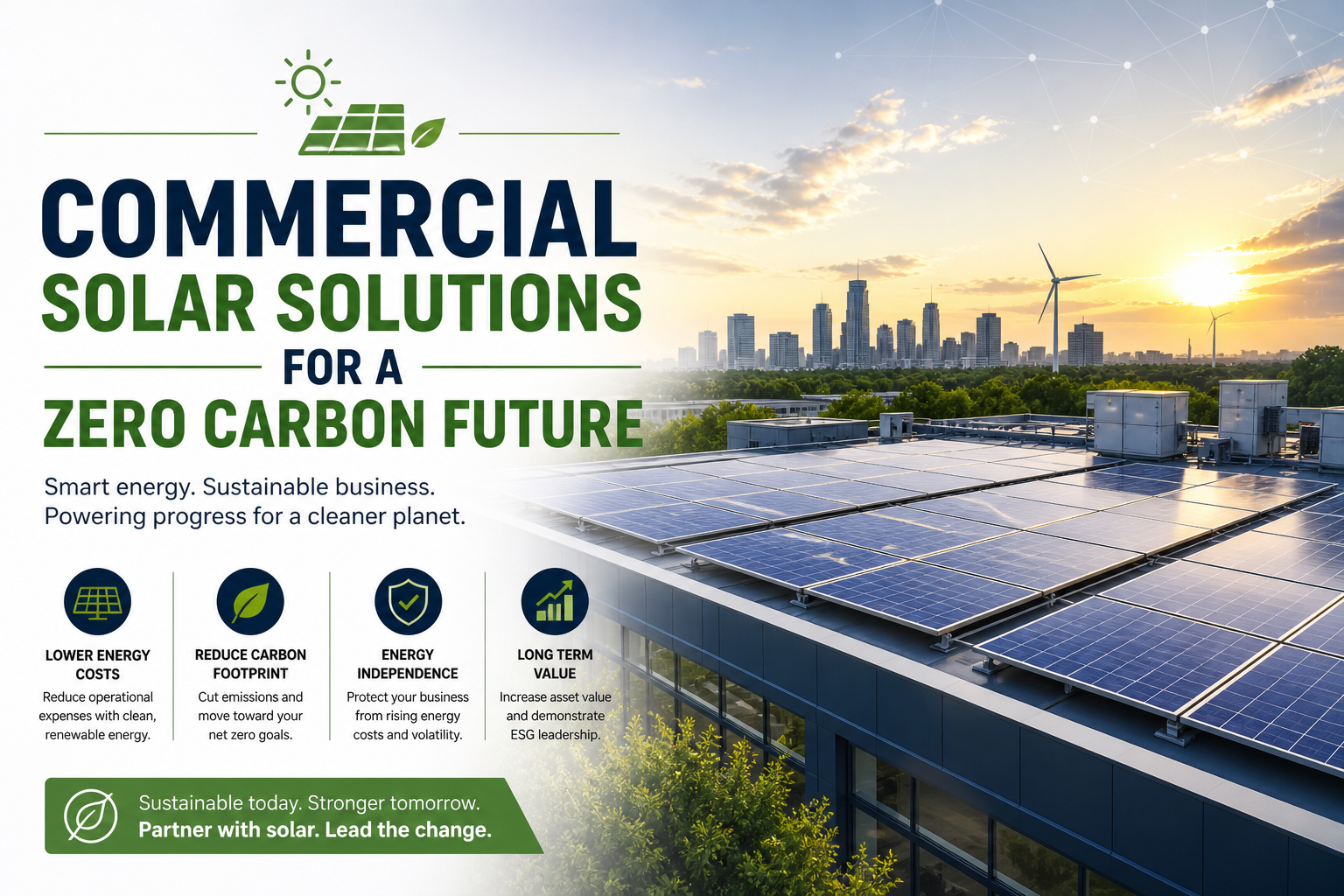
One of the most popular solutions in cities and semi-urban areas is rooftop solar for office building. Many commercial homes have unused roof space that can be effectively used for solar panel installation. This approach allows organizations to generate power without requiring additional land or major infrastructure adjustments.
Rooftop solar structures are particularly useful for offices because they help offset daytime electricity usage, which is often the best. With proper device design, companies can substantially reduce monthly electricity bills and also contribute to environmental sustainability.
Understanding Commercial Solar Installation Cost
The predominant focus for any enterprise is Commercial Solar Installation Cost. While even the initial investment may seem large, it is far more important to view solar power as a long-term asset rather than a rate. The price depends on several elements, including machine capacity, track micro, setup complexity, and location.
Over time, the savings generated by lower energy bills routinely outweigh the initial investment. In many cases, businesses get a full walk back of the investment within a few years. In addition, the authorities’ incentives and financing options make solar adoption more accessible and financially viable.
Commercial Solar Panel Price and Affordability
Commercial solar panel price in India have steadily declined due to technological improvements and accelerated marketplace competition Modern solar panels are greener, longer lasting and have cost power than ever before. This tariff rebate has made solar electricity now not the most accessible to large businesses but additionally available to mid-sized corporations.
When comparing solar investments, agencies must be aware of long-term value rather than just upfront costs. The initial rate of high-output panels can also be barely good but supply better performance and longer, resulting in additional financial savings over the years.
Open Access Solar Power in India
Giving highly energy-consuming companies a flexible and scalable opportunity to install open access solar power in India behind the grid, this edition allows groups to buy solar power from large-scale solar farms without delay.
Instead of generating electricity on their own premises, agencies can invest in agreements with solar power providers and draw electricity from renewable resources This method is especially useful for industries that require large and nonstop power distribution but lack adequate roof or land space.
Open Access Solar Policy Framework
The open access solar policy in India is enabling third birthday party vendors to adopt renewable energy by allowing businesses to source electricity. These rules are designed to ensure true access to the power grid and encourage accessible energy use.
Different states in India have their own rules on open-access access to structures, however the common framework promotes reduced transmission charges, power banking and bendy agreement systems thus minimizing the transition to renewable power for agencies without core operational disruption.
Understanding Open Access Solar Tariff
Open access solar tariff is an essential component in determining cost savings for companies. This fee represents the fee at which businesses purchase solar power thru open get entry to agreements. In most cases, those tariffs are a reduction over traditional grid power prices, making solar power a cost-effective desire.
Tariff structures rely on more than one component, including transmission costs, cycle costs, and nation-specific policies. By locking in long-term agreements, groups can protect themselves from fluctuating electricity tariffs and make huge profits.
Industrial and Commercial Solar Solutions for Growth
Industrial & Commercial Solar Solutions are designed to seamlessly integrate into commercial operations. These structures are scalable, which means they are able to grow alongside the business. Whether it’s a manufacturing unit, corporate office, or warehouse, solar power structures can be customized to meet exact needs.
Beyond the fees and financial savings, solar power also complements the logo identity. Companies that adopt renewable electricity are routinely seen as environmentally responsible, which should improve patron consent and stakeholder trust.
Choosing the Right Solar Partner
The fulfillment of any solar task depends heavily on the expertise of the service provider. Forums like Ask Zero Carbon Focus on delivering customized zero carbon answers for businesses. From machine configuration to installation and refurbishment, the professional guide guarantees the most beneficial overall performance and long-term reliability.
An accurate solar partner also facilitates groups to navigate policies, grants and funding options, making the transition to renewable electricity smoother and more efficient.
Conclusion
For a commercial enterprise, the adoption of industrial sun panels and solar energy systems is not just an environmental decision—it is a strategic business stream. With rising electricity prices and an increasing focus on sustainability, solar energy offers a powerful solution for long-term growth.
Be it through rooftop sun for office buildings, open access to solar energy in India, or better industrial & commercial solar answers, there is more than one way for companies to achieve electricity independence. Information transfer fees, fees, and guidelines allowed organizations to make informed choices that reach their finances and the planet.